| |
|
Entry Date
|
Nick Name
|
Location
|
|
Friday, April 10, 2026
|

|
TowneFamilyVT
|
Vermont
|
 |
Entry 15 of 72 |
 |
|
|
|
Day 10: Ahead of Schedule and Calling an Audible
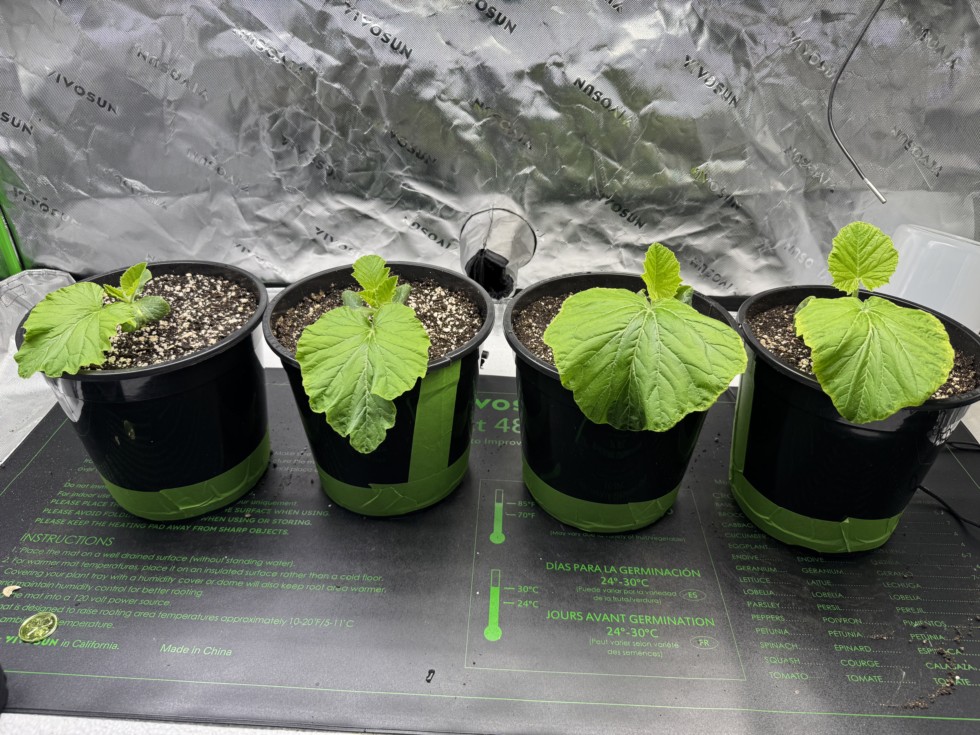
We are 10 days out from placing seeds in the dirt, and I am very happy with the progress. The plants are robust, and the Haist genetics in particular are well ahead of schedule, already pushing first true leaves over 8 inches in diameter.
However, that rapid growth created a slight bottleneck. Because the Haists expanded so quickly, I started seeing calcium stress; a yellowing along the outer edges of the leaves. The plants were building cell walls faster than available calcium could keep up, resulting in pale outer margins.
To correct this, I called an audible. Instead of waiting on the calendar, I bumped the plants up to my Week 3 nutrient schedule early to match their actual biological development. Here is the breakdown of the Week 3 mix and why each component matters right now:
Ascorbic Acid: Added directly to the water first to neutralize chloramine. This protects the delicate soil biologicals from being wiped out by municipal water treatment chemicals.
Calcium Nitrate: Provides highly soluble, instantly bioavailable calcium to correct the pale margins, plus the nitrogen to fuel continued vegetative growth.
RAW Aminos: Calcium is difficult for roots to absorb on its own. The amino acids act as chelators, wrapping calcium ions so they pass easily through the root membrane and stay in plant-available form.
Liquid Opulent Boron (1ppm): If calcium is the building block, boron is the gatekeeper. It facilitates calcium uptake at the root membrane and helps bond calcium into the cell wall structure where it is needed.
Fulvic Acid and Kelp: Fulvic acid is a natural transporter that makes the entire nutrient mix more bioavailable. Kelp provides natural hormones - cytokinins - that signal the roots to expand and support the top growth.
RAW Silica: Acts as structural reinforcement inside the plant's cell walls, giving the leaves rigidity and strength. Critically, I use RAW Silica because it is pH neutral. Traditional liquid silicates are highly alkaline and will instantly react with calcium nitrate in the mixing jug, causing the calcium to precipitate out as useless sludge. RAW Silica prevents this reaction, keeping both nutrients fully available.
The plants responded exactly as intended. By the next morning the leaves had flattened out, the drooping stopped, and the inner canopy was already darkening up.
|
|
|